
EAF Roof Refractory Lining System
STA Commerce supports international enquiries for fired phosphate-bonded andalusite-corundum bricks and modular refractory components used in electric arc furnace roof lining, including the roof body and electrode-surrounding areas. Grade, geometry and technical requirements are coordinated with relevant refractory suppliers. The documented exposure includes temperatures above 1700°C, thermal shock, corrosive slag, metal oxides, iron-oxide foam and mechanical wear.
Refractory Protection for Severe EAF Roof Conditions
The roof of an electric arc furnace is exposed simultaneously to thermal, chemical and mechanical stresses. Temperatures can exceed 1700°C, while slag, metal oxides and iron-oxide foam may aggressively attack the refractory lining.
The zones around the electrode passages are particularly sensitive because they experience concentrated thermal loading, complex geometry and repeated maintenance.
Fired Phosphate-Bonded Andalusite-Corundum Bricks
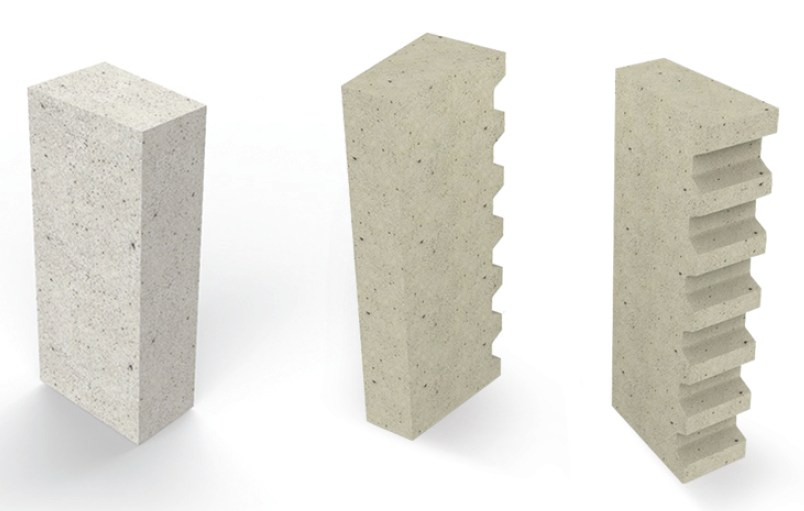
A fired high-alumina refractory produced from high-quality andalusite, fused alumina and selected additives. The phosphate-bonded structure is intended to provide resistance to abrasion, thermal shock and demanding electric arc furnace roof service.
Roof Bricks
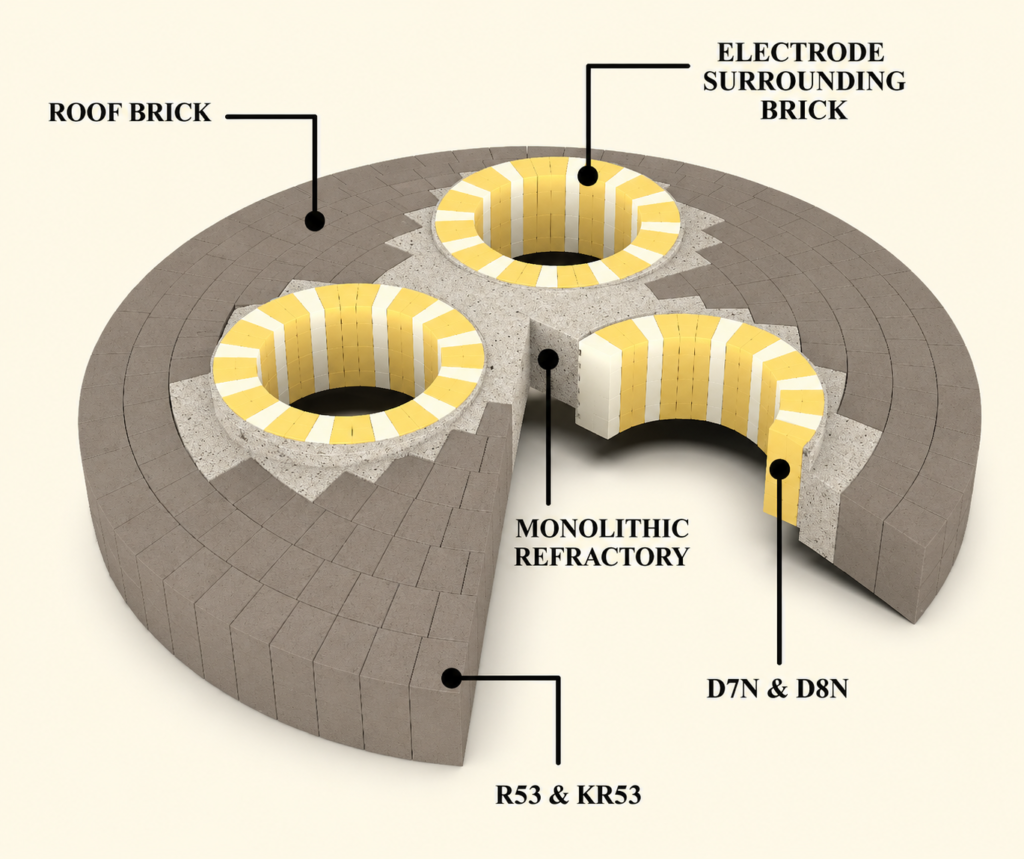
Shaped refractory bricks forming the main body of the EAF roof. Their geometry is manufactured according to the roof profile and furnace design.
Electrode-Surrounding Bricks
Special refractory shapes installed around electrode passages, where the lining faces concentrated heat and complex installation geometry.
EAF Roof Lining Arrangement
A complete roof lining can combine shaped roof bricks, electrode-surrounding bricks and monolithic refractory in a coordinated modular assembly.
| Component | Primary Function | Main Service Requirement |
|---|---|---|
| Roof Brick | Forms the main refractory body of the EAF roof. | Resistance to thermal shock, abrasion, slag and metal oxides. |
| Electrode-Surrounding Brick | Protects and shapes the area around each electrode passage. | Dimensional stability and resistance to concentrated heat. |
| Monolithic Refractory | Fills and seals joints and complex transition zones. | Compatibility with the brick system and repeated thermal cycling. |
| R53 / KR53 Shapes | Design-specific refractory shapes used in the roof body. | Exact conformity with the approved furnace roof drawings. |
| D7N / D8N Shapes | Special components used around electrode-related areas. | Accurate geometry, fit and thermal performance. |
Information Needed for Technical Review
The material quality and geometry should be selected according to the furnace design and actual operating conditions.
Related EAF Refractory Products
For high-wear furnace lining and tapping zones, see MgO-C bricks for EAF and EBT taphole refractories.
Request an EAF Roof Refractory Quotation
Send us the furnace model, roof drawings, electrode-opening dimensions, operating conditions, required quantity and destination country for technical and commercial review.