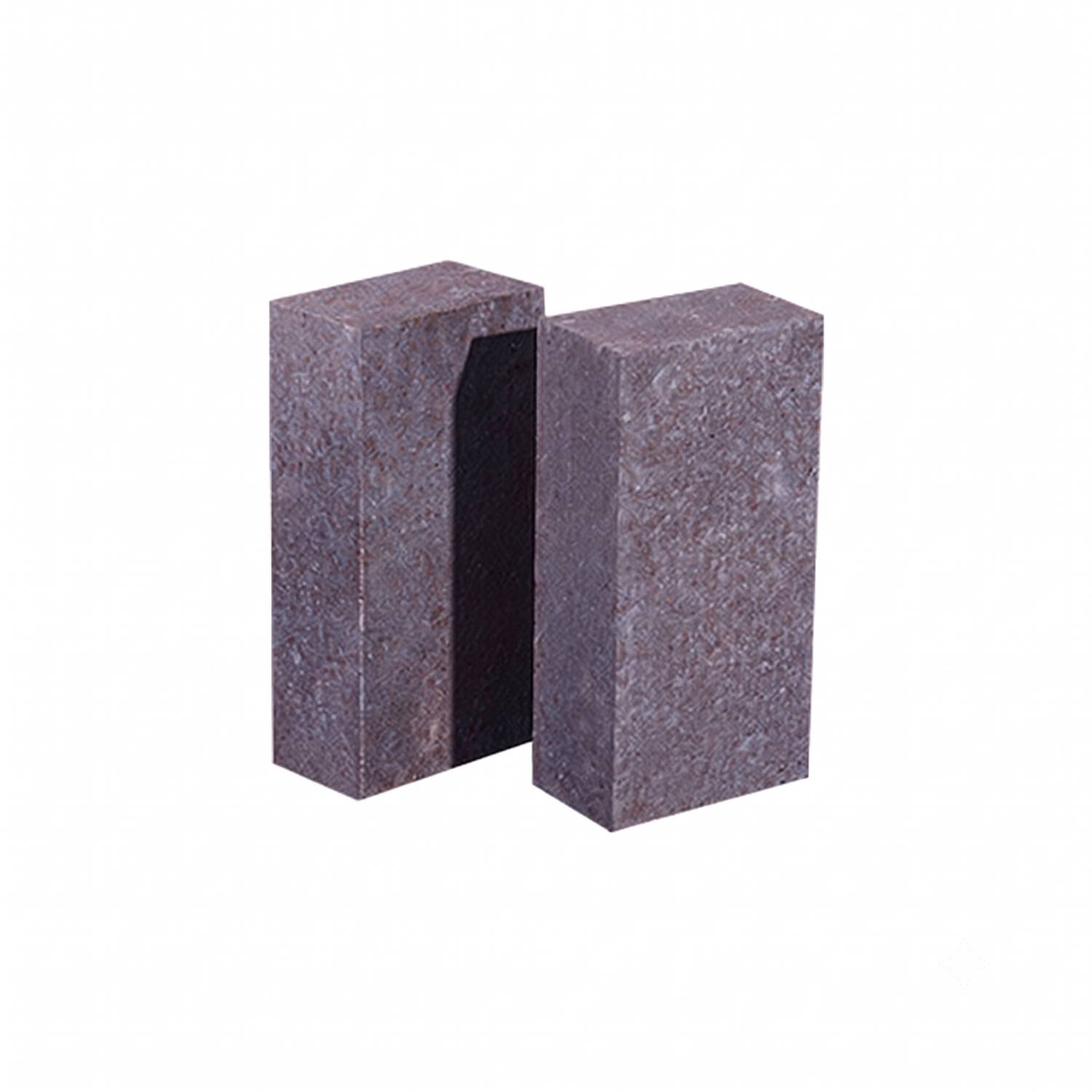
RH Degasser Magnesia-Chrome Refractories

RH Degasser Refractory Lining & Magnesia-Chrome Bricks | STA Commerce
Vacuum Degassing Refractory Solutions

Rebonded Magnesia-Chrome Bricks for RH Degasser Lining

Fired magnesia-chrome refractory solutions for RH vacuum degassers in steelmaking, including working linings, permanent linings, snorkel zones, lower-vessel areas, castables and special refractory components.

RH Degasser Refractory lining solutions for vacuum degassing equipment in steel plants
Magnesia-Chrome High-fired ceramic-bonded refractory for demanding vessel and snorkel zones
RH degasser refractory lining and magnesia-chrome brick zones

Refractory Protection for RH Degasser Vessels

RH degassers operate under vacuum and are exposed to molten steel, aggressive gases, repeated thermal cycling and mechanical wear. The refractory system must therefore protect the vessel, gas-offtake sections, lower body, snorkels and related flow passages.

Fired magnesia-chrome products are used in selected high-wear zones where chemical resistance, dimensional stability and hot strength are required.

Protection against chemical and mechanical corrosion
Dimensional stability at elevated temperature
Low thermal expansion for lining stability
High hot strength in demanding vessel zones

RH Degasser Refractory Zones

The RH degasser lining system includes working, permanent, safety and monolithic refractory sections distributed throughout the vessel and snorkel assembly.
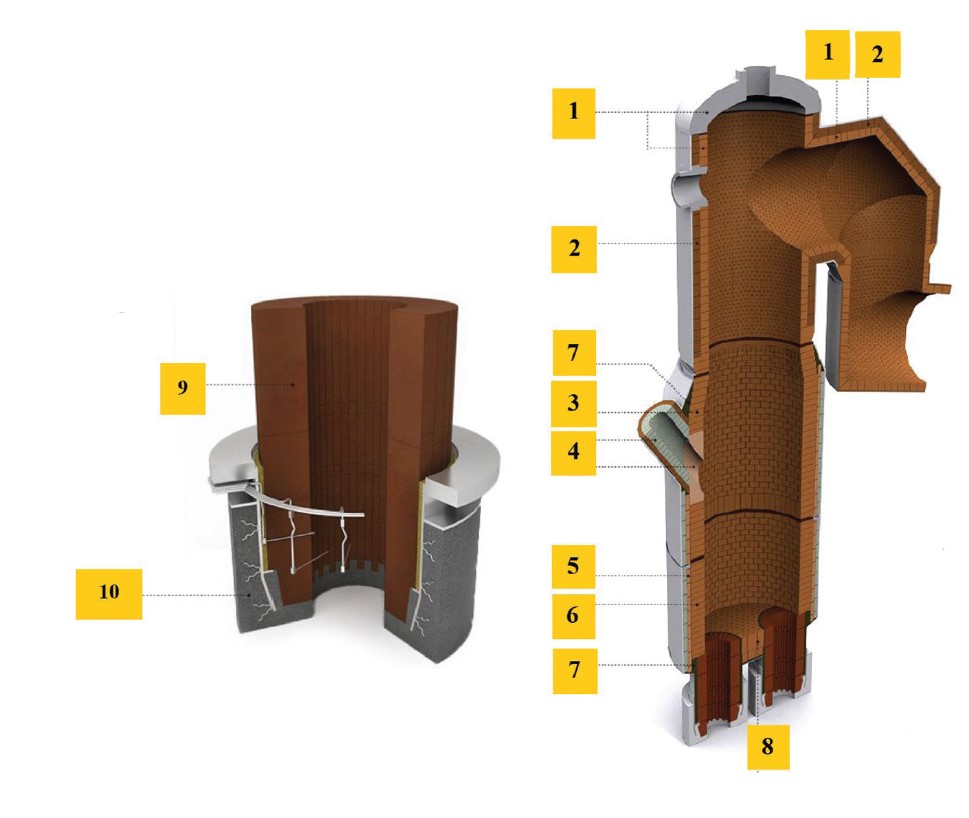
Numbered Reference Diagram The numbers shown in this RH degasser diagram correspond directly to the ten lining-zone explanations below.
Numbered RH degasser refractory lining diagram corresponding to zones 01 through 10
Match numbers 01–10 in the diagram with the numbered cards immediately below to identify each working, permanent, safety and monolithic refractory zone.
01
Gas Off-Take Working Lining Hot-face refractory lining in the gas off-take section.
02
Gas Off-Take Permanent Lining Permanent backing lining supporting the gas off-take zone.
03
Upper Vessel Working Lining Working lining protecting the upper part of the vessel.
04
Alloy Chute Refractory-protected alloy addition passage.
05
Lower Vessel Safety Lining Secondary protective lining behind the lower-vessel working lining.
06
Lower Vessel Working Lining Hot-face refractory lining in the lower vessel.
07
Filling Mixes and Castables Monolithic materials for joints, transitions and installation areas.
08
Bottom Refractory lining in the bottom section of the RH vessel.
09
Snorkel & Legs Working Lining Working lining protecting the immersion legs and snorkel areas.
10
Snorkel Outer Working Lining External working lining surrounding the snorkel structure.

Performance Benefits of Magnesia-Chrome Refractories

Chemical and Mechanical Resistance Designed to resist corrosive attack and mechanical wear in demanding RH degasser zones.
Dimensional Stability Maintains lining geometry under elevated-temperature service.
Low Thermal Expansion Helps limit dimensional movement during thermal cycling.
High Hot Strength Provides mechanical integrity in high-temperature vessel areas.

High-Fired Rebonded Magnesia-Chrome Brick

A dense ceramic-bonded magnesia-chrome refractory for selected lower-vessel, bottom and snorkel zones of RH vacuum degassers.
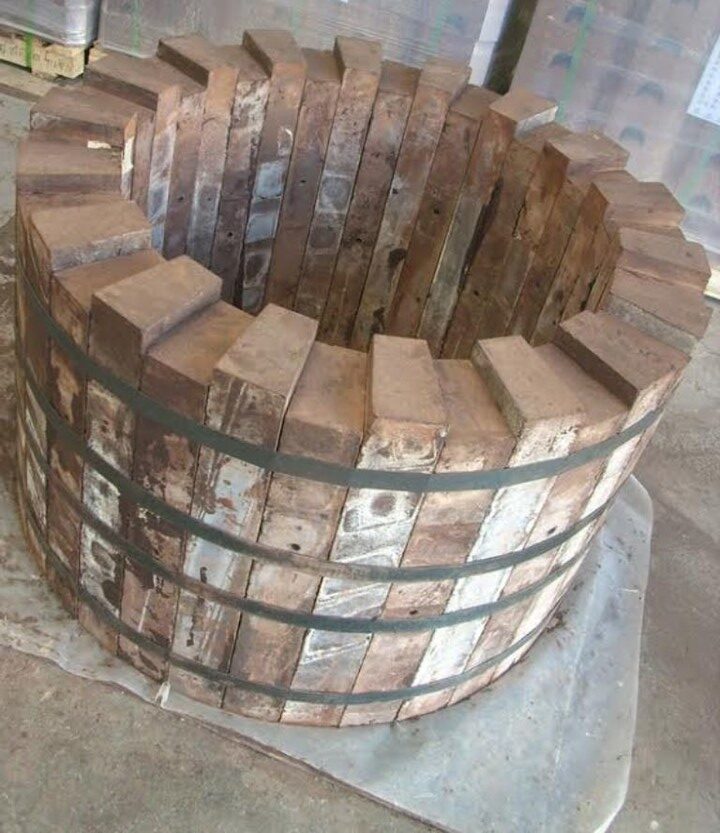
RH degasser lower vessel and snorkel refractory lining areas
Reference Grade: MEHR.CHROME.OX60I

Rebonded Magnesia-Chrome Brick

A high-fired ceramic-bonded magnesia-chrome brick based on fused magnesia-chrome co-clinker, dead-burned magnesia and chrome ore, with reduced apparent porosity.

Typical Characteristics
High-fired ceramic-bonded structure
Fused magnesia-chrome co-clinker base
Dead-burned magnesia and chrome-ore raw materials
Reduced apparent porosity
High hot strength and dimensional stability
Resistance to chemical and mechanical corrosion
Main Application
Snorkel area of RH degassers
Bottom section of RH degassers
Lower-vessel refractory lining

Product Classification and Application

Item Technical Description Application
Reference Grade MEHR.CHROME.OX60I Product reference for the specified magnesia-chrome refractory quality.
Type Rebonded Magnesia-Chrome Brick High-wear and chemically demanding RH degasser zones.
Composition Concept Fused magnesia-chrome co-clinker, dead-burned magnesia and chrome ore. Selected according to the vessel zone and operating conditions.
Primary Application Dense high-fired ceramic-bonded refractory with reduced apparent porosity. Snorkel area, bottom section and lower vessel of the RH degasser.
Technical note: Exact chemical composition, porosity, bulk density, cold-crushing strength, refractoriness and brick geometry must be confirmed from the manufacturer’s approved technical data sheet and the customer’s RH degasser drawings before supply.

Information Needed for Technical Selection

Refractory quality and brick geometry should be selected according to the RH degasser design and actual operating conditions.

RH degasser manufacturer, model and vessel capacity
Refractory-lining drawings and brick schedule
Required lining zone and component number
Normal and maximum operating temperature
Vacuum-cycle and process conditions
Brick dimensions, shapes and required quantity
Expected service campaign and wear history
Destination country and required documentation

Request an RH Degasser Refractory Quotation

Send us the RH degasser model, lining drawings, operating conditions, brick dimensions, required quantity and destination country for technical and commercial review.

Contact STA Commerce