
Ladle Purging Plugs & Housing Blocks
STA Commerce supports international enquiries for alumina-spinel ladle purging plugs and refractory housing blocks used in argon gas-stirring applications in steel ladles. Documented designs include slot-type and segment-type plugs, with a porous insert identified in the segment-type design. These components support ladle metallurgy, molten-steel homogenization and inclusion-removal operations; technical requirements are coordinated with relevant refractory suppliers.
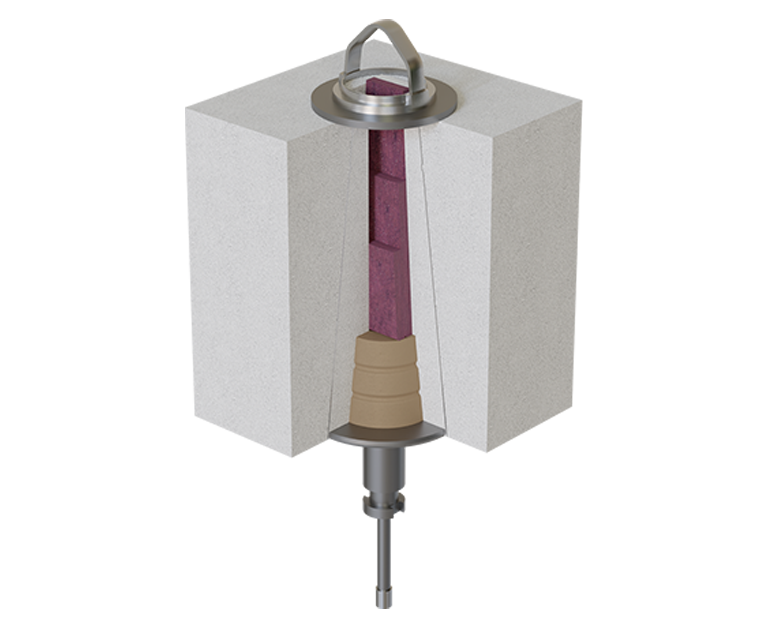
Argon Stirring for Ladle Metallurgy
Purging plugs introduce controlled gas flow through the bottom of the ladle. The rising gas promotes circulation within the molten steel and supports several important refining and homogenization operations.
The required plug design and argon-flow capacity should be selected according to ladle geometry, steel grade, treatment practice and the desired stirring intensity.
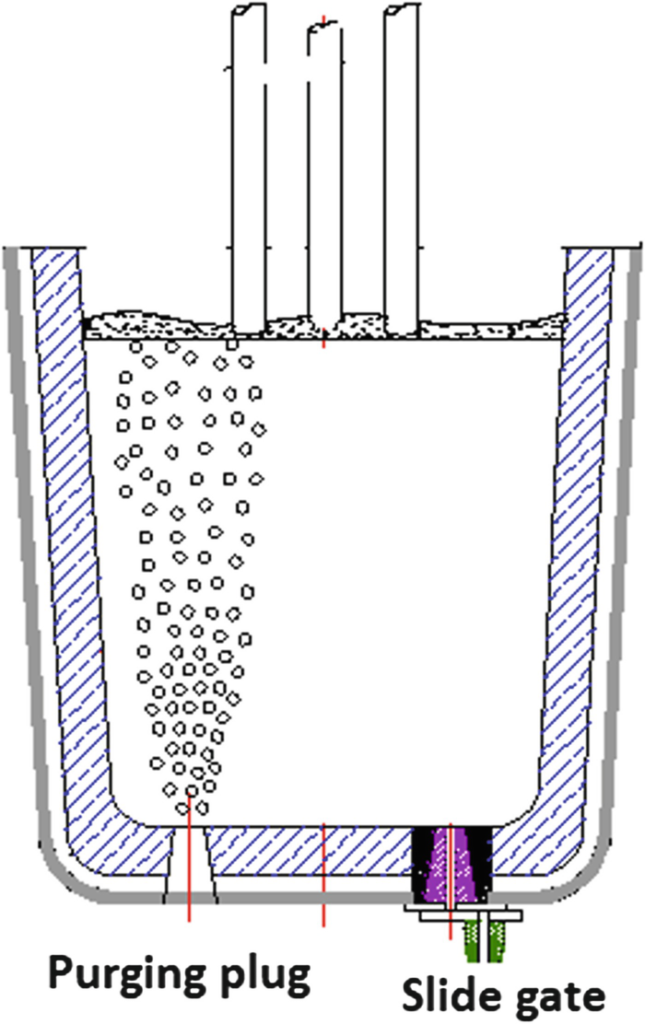
Purging Plugs & Housing Blocks for Steel Ladles
The catalogue introduces general purging plugs, slot-type and segment-type designs, together with housing-block assemblies for faster ladle maintenance.
Purging Plug
A refractory gas-injection component installed in a steel ladle to introduce argon into the molten bath and support stirring, refining and homogenization.
Slot-Type Purging Plug
A monolithic alumina-spinel body containing multiple gas-blowing slots. Flow capacity can be adjusted through the number and effective surface area of the slots.
Segment-Type Purging Plug
A unidirectional blowing system formed by several refractory segments inside an alumina-spinel body. A porous insert can act as an end-of-life replacement indicator.
Housing Block Assembly
Purging plugs and housing blocks can be supplied as a pre-assembled unit, helping simplify installation and reduce the time required for plug replacement.
Slot and Segment Gas-Flow Designs
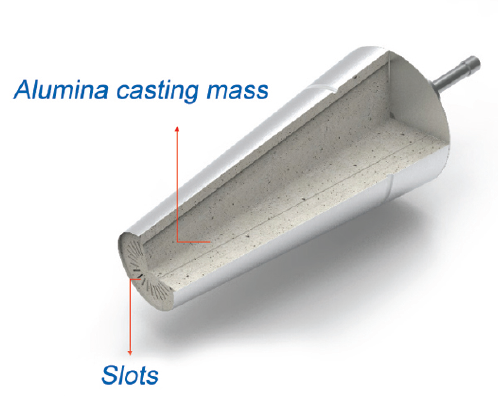
Slot-Type Construction
The catalogue illustration shows gas slots formed within an alumina castable or alumina-spinel body. Slot number and geometry determine the available blowing surface and flow capacity.
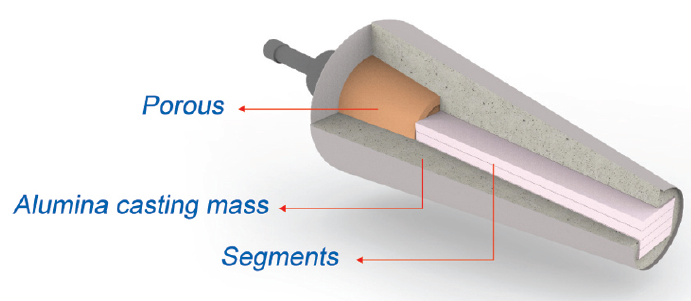
Segment-Type Construction
The segment-type design uses shaped refractory segments to create the gas passages. The catalogue also identifies a porous insert and alumina casting mass.
Argon Flow Comparison
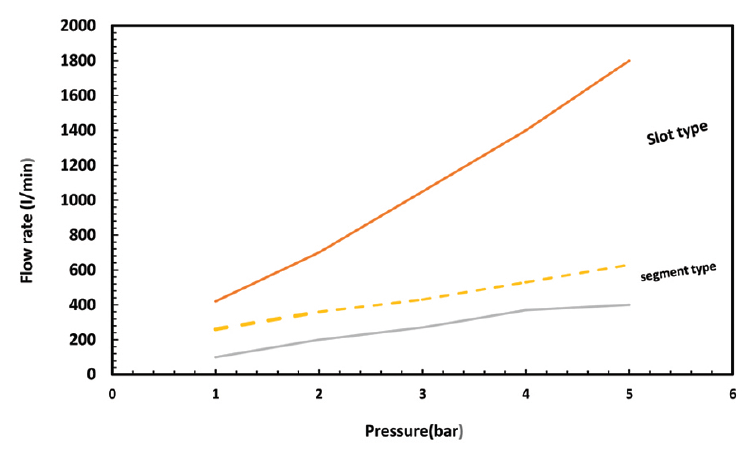
Different Designs for Different Stirring Requirements
The catalogue comparison shows that the slot-type plug develops a steeper rise in argon flow as gas pressure increases, while the segment-type plug follows a lower, more gradual flow curve.
The correct design should therefore be selected based on the ladle process, allowable gas pressure, target flow rate and required bath-stirring intensity.
Slot-Type Purging Plug Dimensions
Dimensions below are transcribed from the supplied catalogue and are stated in millimetres.
| Format | a (mm) | b (mm) | L (mm) | h (mm) |
|---|---|---|---|---|
| GP2 | 71 | 126 | 360 | 252 |
| GP3 | 55 | 180 | 360 | 300 |
| GP4 | 78 | 180 | 360 | 300 |
| GP5 | 110 | 220 | 360 | 440 |
Purging Plug Material Properties
The following values are reproduced from the visible quality table in the supplied catalogue pages.
| Property | PGP/SL | PGP/ST | WB PGP (AS6) |
|---|---|---|---|
| Al₂O₃ (%) | 93–96 | 94–97 | 94–97 |
| CaO (%) | 1–2 | 1–2 | 1–2 |
| MgO (%) | 2–4 | 1–3 | 1–3 |
| Fe₂O₃ (%) | 0.3 | 0.3 | 0.3 |
| Apparent Porosity (%) | 11–16 | 12–17 | 13–19 |
Benefits of the Purging System
Information Needed for Product Selection
Complete ladle and process information is required to confirm plug type, flow range, dimensions and assembly design.
Related Ladle and Casting Flow-Control Products
For ladle discharge and continuous-casting flow control, see our ladle slide gate system and tundish nozzles and flow-control refractories.
Request a Ladle Purging Plug Quotation
Send us the ladle model, drawings, required plug type, argon pressure and flow rate, current service life, quantity and destination country for technical and commercial review.